


The emotional rollercoaster of supporting east London’s most unpredictable football club has taken yet another dramatic turn. For a club that recently tasted continental glory, the reality of a modern campaign can be brutally uncompromising. Following a turbulent sequence of managerial shifts and tactical overhauls, the focus at the London Stadium has completely shifted from European ambitions to a gritty, high-stakes rebuilding mission.
As the squad prepares for a gruelling campaign, the board’s decision to maintain stability in the dugout marks the beginning of a defining era. With a passionate fan base demanding a swift return to the standard they expect, the upcoming months will test the depth, resilience, and identity of the club.
The Road to Rebuilding: What Went Wrong?
To understand where the club is heading, it is vital to analyze the structural fractures that led to this point. The transition away from the long-term defensive stability of the past was always going to be risky, but few predicted how quickly the momentum would unravel.
Also Read: Fountain of Youth Reviews Exploring the Story, Audience Reactions, and Critical Response
The Managerial Merry-Go-Round
The boardroom took decisive action early in the previous campaign, parting ways with Graham Potter after an opening month that yielded just three points. In stepped Nuno Espírito Santo in late September, tasked with steadying a sinking ship. While Nuno brought structural discipline and took the survival battle right down to the final weekend, an overall record of 9 wins, 9 draws, and 15 defeats was not quite enough to prevent a painful 18th-place finish.
Despite a final-day 3–0 victory over Leeds United, results elsewhere sealed a heartbreaking relegation with 39 points—the highest points total for a relegated side in over a decade.
Squad Disruptions and Financial Realities
The challenges were compounded by high-profile departures that stripped the squad of elite technical quality. Key figures like Mohammed Kudus moved across London to Tottenham Hotspur, while Lucas Paquetá returned to Brazil with Flamengo. Losing such creative fulcrums created a severe identity crisis on the pitch. While heavy investments were made in players like Jean-Clair Todibo and Mateus Fernandes, the lack of immediate chemistry proved costly in the unforgiving environment of the top flight.
The Blueprint for a Championship Promotion Charge
Relegation is a financial and emotional shock, but the hierarchy has chosen stability over a complete scorched-earth policy. Backed by Czech billionaire Daniel Křetínský and co-chairman David Sullivan, the board has firmly backed Nuno Espírito Santo to lead the promotion charge.
Continuity in the Dugout
While many expected Nuno to exit via a break clause in his contract, intensive boardroom meetings resulted in a mutual commitment to spearhead an immediate return. Nuno’s historical pedigree is the primary reason for this trust; he previously guided Wolverhampton Wanderers out of the Championship in 2018 with a dominant 99-point campaign.
To reinforce this mission, the club has reunited Nuno with his long-term assistant head coach, Rui Pedro Silva, who played a pivotal role in those successful Wolves and Nottingham Forest eras.
Keeping the Core Together
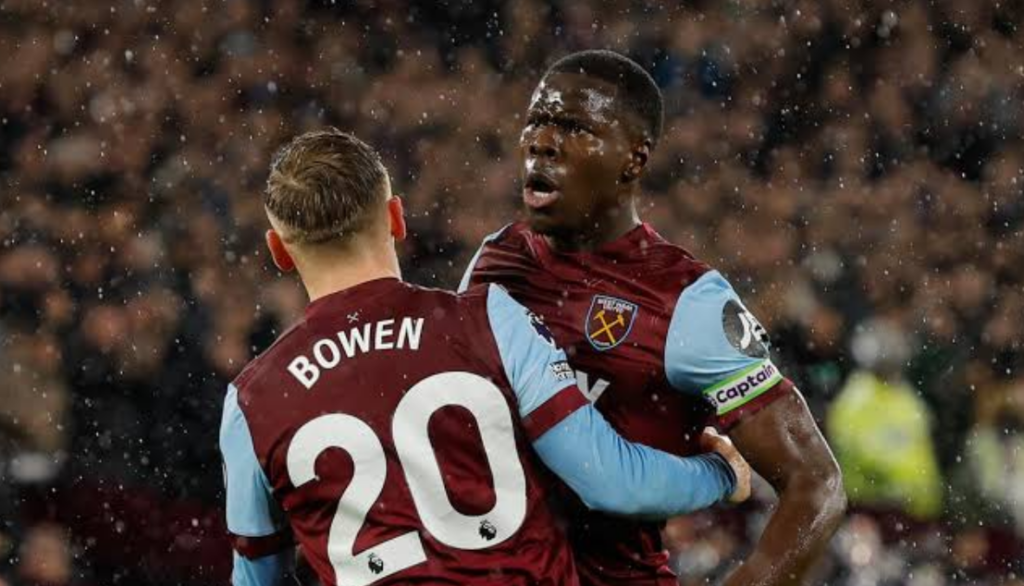
The primary objective of this summer transfer window is safeguarding key assets. Keeping club captain and top goalscorer Jarrod Bowen—who netted 11 goals across all competitions last term—is critical. Bowen’s work rate and top-tier quality make him the ideal figurehead for a demanding 46-game league schedule. Alongside emerging talents like Fernandes, the objective is to build a high-intensity side capable of breaking down stubborn, low-block defenses.
+---------------------------------------------------------+
|                WEST HAM UNITED PROFILE                  |
+---------------------+-----------------------------------+
| Head Coach          | Nuno Espírito Santo               |
| Assistant Coach     | Rui Pedro Silva                   |
| Primary Venue       | London Stadium (Cap: 62,500)      |
| 2025/26 Top Scorer  | Jarrod Bowen (11 Goals)           |
| Major Shareholders  | David Sullivan, Daniel Křetínský  |
+---------------------+-----------------------------------+
Tactical Evolution Under Nuno
Playing in the second tier requires a different physical and psychological approach than the Premier League. Teams visiting the London Stadium will treat it as their cup final, meaning the Hammers can no longer rely purely on counter-attacking containment.
Shifting from Defensive Block to Dominance
Nuno’s traditional tactical blueprint relies heavily on a compact back three or a highly disciplined 4-2-3-1 that uses rapid wing-backs to stretch the opposition. In the Championship, the burden of possession will shift heavily onto the east Londoners. The technical proficiency of midfielders like Mateus Fernandes will be crucial in transition, moving the ball quickly to prevent opponents from settling into rigid defensive shapes.
Relying on Youth and Academy Graduation
The famed “Academy of Football” must once again become the lifeblood of the first team. With Mark Robson returning to his role leading the Under-21s, a clear pathway has been re-established for elite youth prospects to break into the senior matchday squad. Navigating a dense fixture list that includes midweek travel across the country requires a deep squad, and homegrown starlets provide both financial sustainability and an intrinsic understanding of the club’s traditional identity.
Managing Expectations on the Road Back
History shows that big clubs cannot simply stroll back into the top flight on reputation alone. The Championship is an absolute meat grinder of a league, filled with historic teams and physical encounters where tactical perfection often takes a backseat to sheer determination.
The board’s public declaration that instant promotion is the “unquestionable goal” removes any room for excuses. For Nuno, the pressure will be immediate. A slow start to the season will amplify fan anxieties, while a strong, authoritative opening month could ignite the momentum needed to turn the London Stadium back into an absolute fortress. The tools, the coaching staff, and the stadium infrastructure are all in place; now, it is entirely down to execution on the pitch.
Conclusion
The upcoming season represents a true test of character for west ham. Stripped of top-flight status but armed with a highly experienced promotion specialist in Nuno Espírito Santo, the club stands at a vital crossroads. The path back to elite status requires unity, tactical adaptability, and an unwavering commitment from both the players and the boardroom. If the Hammers can channel the fierce loyalty of their fan base and establish early dominance, this temporary setback could lay the foundation for a much stronger, more sustainable era of success.
FAQs
Who is the current manager of the club?
Nuno Espírito Santo is the head coach, having been appointed in September 2025. Despite the club’s relegation, the board officially confirmed that Nuno is staying on for the current campaign to target an immediate return to the Premier League.
Who was the top goalscorer last season?
Jarrod Bowen was the leading goalscorer for the club during the difficult 2025/26 campaign, scoring 9 goals in the Premier League and 11 goals across all competitions.
Who owns the football club?
The club operates under a joint ownership structure. The primary shareholders are David Sullivan (38.8%), Czech billionaire Daniel Křetínský (27%), and Vanessa Gold (25.1%), alongside other minority investors.
Where does the team play its home matches?
The team plays all of its home fixtures at the London Stadium, located in Stratford, East London. The world-class venue boasts a capacity of approximately 62,500 for domestic football matches.
For more updates visit: MAGAZINE ZILLA
