

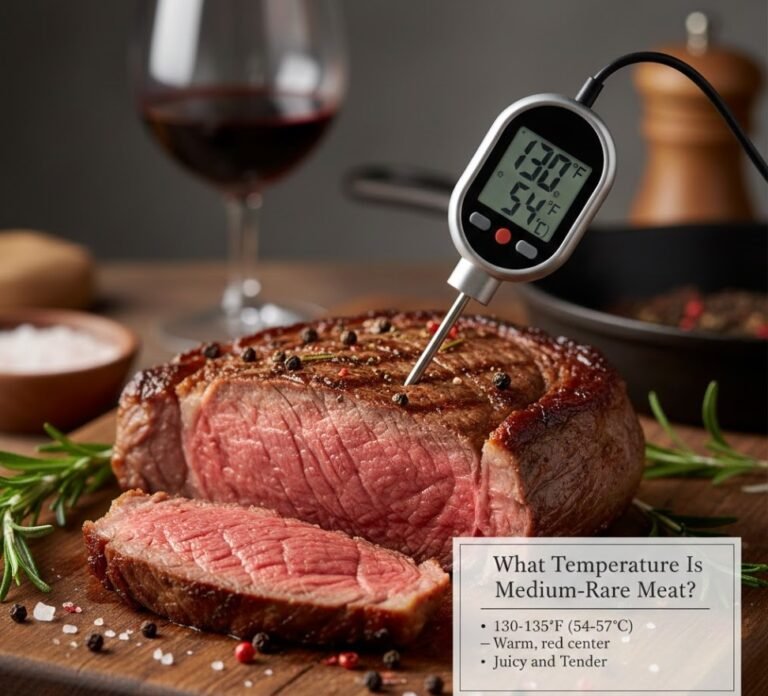
Cooking meat to the perfect doneness can feel confusing, especially when recipes talk about terms like rare, medium-rare, or medium. One of the most popular levels of doneness—especially for steak lovers—is medium-rare. But many home cooks still ask the same question: what temperature is medium-rare meat?
In this guide, we will explain the exact temperature for medium-rare meat, why it matters, how to measure it correctly, and how medium-rare compares to other doneness levels. Whether you’re cooking steak, beef, lamb, or even burgers, this article will help you cook with confidence.
What Does Medium-Rare Mean?
Before we talk about temperature, it’s important to understand what medium-rare actually means.
Medium-rare meat is cooked so that the inside is warm, red to pink, and very juicy. The outside is well-seared, while the center remains tender and flavorful. This doneness is popular because it keeps the meat soft without being undercooked.
People can also read this: The Perfect Medium-Rare Steak Temp: A Complete Guide
For many cuts of beef, especially steak, medium-rare is considered the best balance between flavor, texture, and juiciness.
What Temperature Is Medium-Rare Meat?
The internal temperature for medium-rare meat is 130°F to 135°F (54°C to 57°C).
This temperature range applies mainly to beef, lamb, and veal. At this level:
- The meat is warm throughout
- The center is bright pink to red
- The juices remain inside the meat
- The texture is soft and tender
Most chefs aim for 135°F (57°C) and then allow the meat to rest, which slightly raises the temperature before serving.
Why Temperature Matters More Than Time
Many people rely on cooking time to judge doneness, but time can be misleading. Thickness, heat level, and cooking method all affect how long meat takes to cook.
Also Read: FintechZoom.com Business: A Complete Guide to the Platform’s Coverage, Insights & Impact
That’s why internal temperature is the most accurate way to know if meat is medium-rare. Two steaks cooked for the same amount of time can end up very different if one is thicker or cooked on higher heat.
Using temperature removes the guesswork.
Best Tool to Measure Medium-Rare Temperature
To accurately cook medium-rare meat, you should use a meat thermometer.
Types of Thermometers
- Instant-read thermometer – Quick and accurate
- Digital probe thermometer – Ideal for grilling and roasting
- Oven-safe thermometer – Stays in the meat while cooking
How to Use It Correctly
- Insert the thermometer into the thickest part of the meat
- Avoid touching bone or fat
- Check temperature near the end of cooking
- Remove meat at 130–132°F and let it rest
Medium-Rare Temperature for Different Meats
Beef (Steak, Roast)
- Medium-rare temperature: 130–135°F (54–57°C)
- Color: Red center with pink edges
- Texture: Very tender and juicy
Lamb
- Medium-rare temperature: 130–135°F
- Flavor: Rich and slightly pink
- Best cuts: Lamb chops, leg of lamb
Veal
- Medium-rare temperature: 130–135°F
- Texture: Soft and moist
- Should be rested before slicing
Burgers
Ground meat is different. Even though some people like medium-rare burgers, food safety guidelines recommend cooking ground beef to 160°F because bacteria can be mixed throughout the meat
What Medium-Rare Meat Looks Like Inside
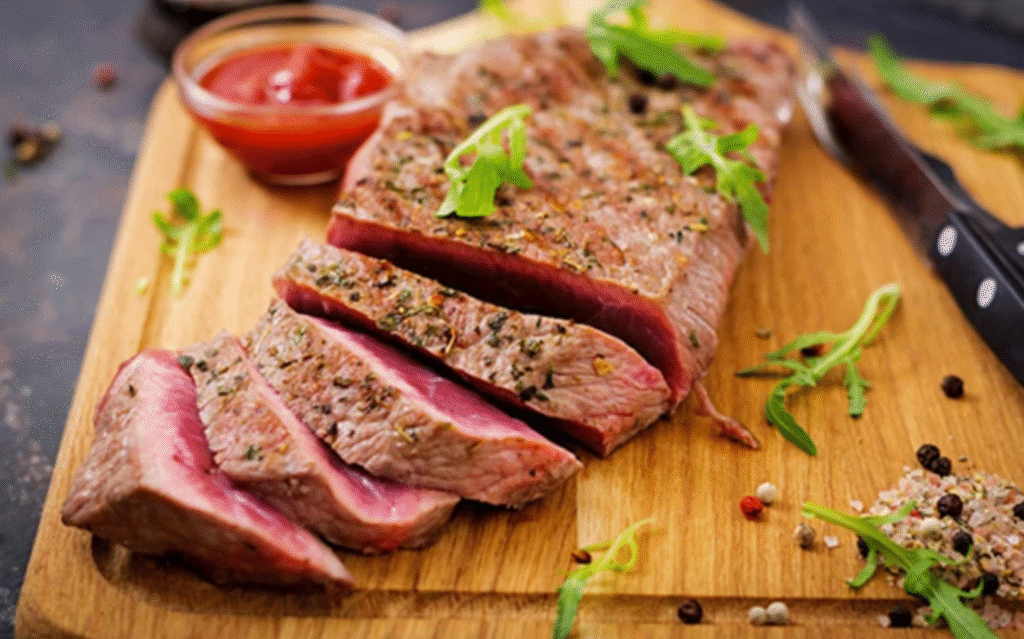
If you cut into a medium-rare steak, you’ll notice:
- A warm red center
- Pink transitioning toward the edges
- Slightly firm but springy texture
- Juices flowing, not dry
This visual is helpful, but temperature is still the safest method.
Medium-Rare vs Other Doneness Levels
Understanding how medium-rare compares to other levels can help you choose what you prefer.
Rare
- Temperature: 120–125°F (49–52°C)
- Very red inside
- Extremely soft
- Some people find it too raw
Medium-Rare
- Temperature: 130–135°F (54–57°C)
- Red-pink center
- Juicy and tender
- Most popular doneness
Medium
- Temperature: 140–145°F (60–63°C)
- Pink center
- Slightly firmer
- Less juice
Medium-Well
- Temperature: 150–155°F (66–68°C)
- Small hint of pink
- Firmer texture
Well-Done
- Temperature: 160°F+ (71°C+)
- No pink
- Dry and firm
How to Cook Medium-Rare Steak Perfectly
Pan-Seared Method
- Bring steak to room temperature
- Season with salt and pepper
- Heat pan until very hot
- Sear steak 2–3 minutes per side
- Check internal temperature
- Remove at 130–132°F
- Rest for 5 minutes
Grilling Method
- Preheat grill to high heat
- Grill steak 3–4 minutes per side
- Use thermometer to check doneness
- Remove at medium-rare temperature
- Let rest before slicing
Why Resting Meat Is Important
Resting meat allows the juices to redistribute evenly. If you cut too early, the juices escape and the meat becomes dry.
For medium-rare meat:
- Rest for 5–10 minutes
- Temperature may rise 3–5 degrees
- Final result stays juicy and tender
Is Medium-Rare Meat Safe to Eat?
For whole cuts of beef, lamb, and veal, medium-rare is generally safe when cooked properly. Bacteria are usually on the surface, and high heat kills them during searing.
However:
- Ground meat should be cooked thoroughly
- Pregnant individuals or those with weakened immune systems may prefer higher doneness
Common Mistakes When Cooking Medium-Rare Meat
- Not using a thermometer
- Cooking straight from the fridge
- Cutting meat too early
- Using low heat for searing
- Overcooking during resting
Avoiding these mistakes helps you achieve the perfect medium-rare result.
Why Chefs Prefer Medium-Rare
Professional chefs often recommend medium-rare because:
- Fat melts properly
- Meat fibers remain tender
- Natural flavors shine
- Texture is balanced
It’s especially ideal for premium cuts like ribeye, filet mignon, and sirloin.
Final Thoughts: What Temperature Is Medium-Rare Meat?
So, what temperature is medium-rare meat? The simple answer is 130°F to 135°F (54°C to 57°C).
Cooking meat to this temperature gives you:
- Maximum juiciness
- Rich flavor
- Tender texture
- Restaurant-quality results at home
With a good thermometer and a little practice, anyone can cook perfect medium-rare meat. Whether you’re grilling, pan-searing, or roasting, temperature—not guesswork—is the key to success.
For more updates visit: MAGAZINE ZILLA

0 Comments