

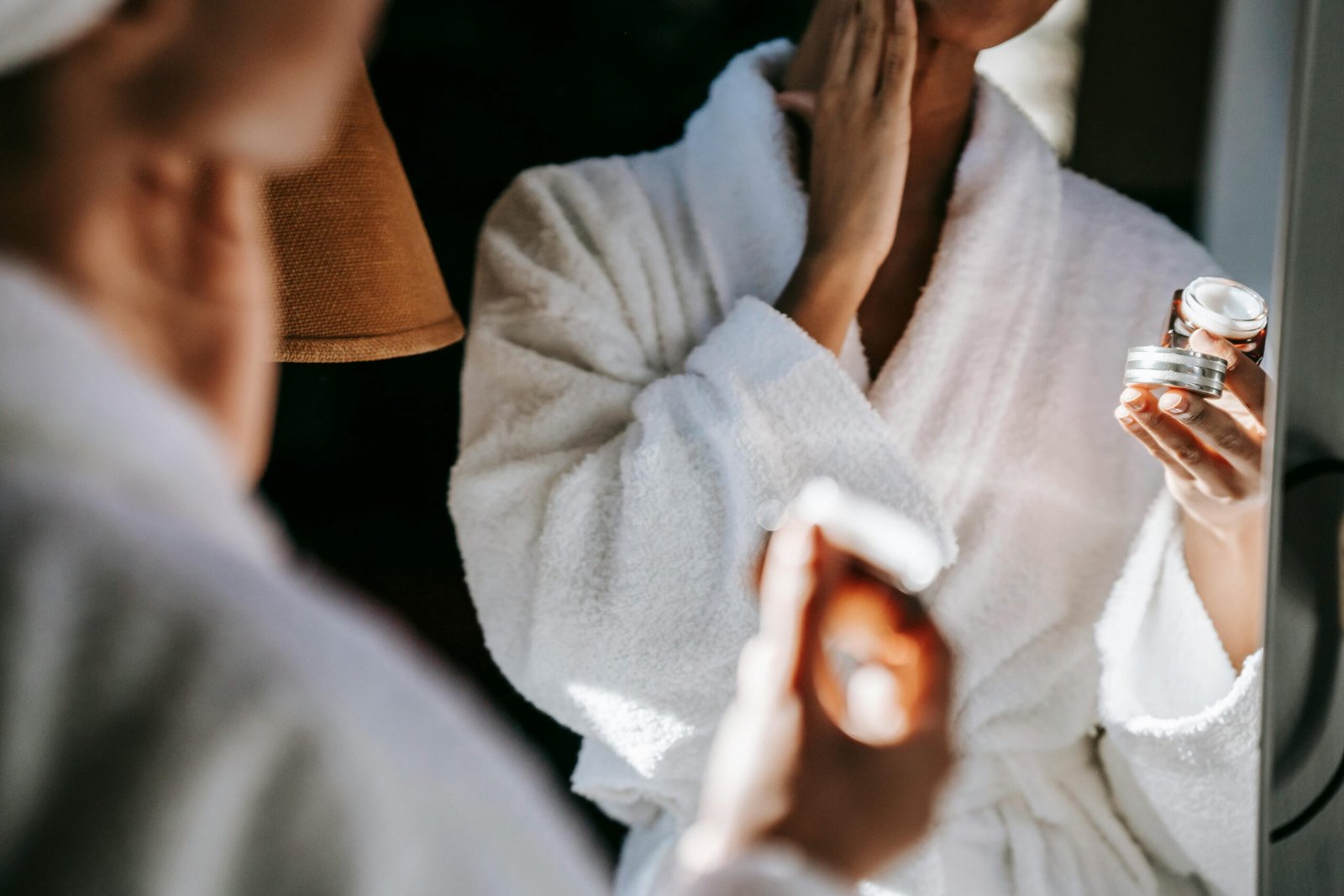
Most people with psoriasis or eczema invest considerable thought in their moisturiser. Far fewer give the same consideration to their cleanser – despite the fact that cleansing is the first step in every skincare routine and has a direct impact on everything that follows. The wrong body wash can strip the skin’s natural lipids, disrupt the acid mantle, trigger irritation and undo in minutes the barrier support that a good moisturiser takes hours to build. For skin that is already compromised, the choice of cleanser isn’t a secondary consideration – it’s foundational.
Why Standard Body Washes Are Problematic for Sensitive and Psoriatic Skin
Conventional body washes and shower gels are formulated primarily for cleaning efficacy and sensory appeal – rich lather, strong fragrance, a fresh feeling after use. These qualities come at a cost for sensitive or compromised skin. The surfactants responsible for lather – sodium lauryl sulphate being the most widely cited example – are effective at removing dirt and oil, but they don’t discriminate between what should be removed and what should stay.
For healthy skin with an intact barrier, this is a manageable trade-off. For psoriatic or atopic skin, where the barrier is already compromised and the skin’s lipid composition is abnormal, using a harsh surfactant-based cleanser is like washing away the foundation of a house that’s already structurally unstable.
The result is skin that feels tight and dry immediately after washing, is more susceptible to irritation from other products, loses moisture more rapidly throughout the day and is more likely to respond to minor triggers with a flare.
What to Look for in a Body Wash for Psoriasis-Prone Skin
The ideal body wash for psoriatic or eczema-prone skin does two things simultaneously – it cleanses effectively enough to remove sweat, environmental pollutants and product residue, while preserving the skin’s natural lipid barrier and maintaining its slightly acidic pH.
Several formulation characteristics indicate a cleanser that is likely to be well tolerated by compromised skin. Mild, low-irritation surfactants – such as cocamidopropyl betaine or sodium cocoyl isethionate – clean without the aggressive stripping associated with SLS-based formulations. An acidic or skin-neutral pH – around 4.5 to 5.5 – supports the acid mantle and the skin microbiome, both of which play important roles in barrier function. Added emollients and conditioning agents in the wash formula help offset any lipid removal that occurs during cleansing. Fragrance-free or very low fragrance formulations reduce the risk of sensitisation – fragrance is one of the most common triggers of contact dermatitis and is frequently problematic for atopic skin.
Healpsorin Body Wash – Formulated for the Skin It’s Washing
Healpsorin Body Wash is designed specifically for skin affected by psoriasis and atopic dermatitis, with a formulation approach that prioritises barrier preservation alongside effective cleansing. Rather than the standard approach of formulating for lather and fragrance and then adding token soothing ingredients, Healpsorin Body Wash starts from the therapeutic requirements of compromised skin and builds the formulation from there.
The result is a cleanser that works gently enough for daily use on sensitive and psoriatic skin without the stripping effect that makes conventional body washes counterproductive for this skin type. The texture and application experience are designed to make the product feel like a normal part of a shower routine rather than a clinical or compromise product – because compliance with daily skincare is essential for results, and people don’t consistently use products they find unpleasant.
How Cleansing Technique Affects Outcomes for Psoriatic Skin
The product itself is only part of the equation. How you wash matters nearly as much as what you wash with when skin is compromised. Several aspects of cleansing technique have a significant impact on skin condition in psoriasis and atopic dermatitis.
Water temperature is one of the most important variables. Hot water feels soothing on itchy psoriatic skin in the short term – the heat temporarily overrides the itch signal. But it also strips lipids more aggressively than lukewarm water and causes vasodilation that can worsen redness and inflammation. Lukewarm water, kept as consistent as possible across showers and baths, is the dermatological standard recommendation.
Shower duration affects how much lipid is removed during each wash. Longer showers mean more exposure to water and surfactants, more lipid removal and more post-wash dryness. Short showers – five to ten minutes – minimise this effect without compromising cleansing efficacy.
Application method matters too. Washcloths, loofahs and exfoliating tools create mechanical friction that is genuinely harmful to psoriatic plaques and inflamed atopic skin. Hands are the appropriate application tool for therapeutic cleansers on compromised skin.
Post-wash drying technique is the final piece of the cleansing routine. Rubbing with a towel causes friction and mechanical irritation. Patting dry – gently pressing the towel against the skin rather than rubbing – removes surface water without aggravating sensitive skin or disturbing the scale on psoriatic plaques.
Building the Full Routine – Where Body Wash Fits
A body wash is most effective when it’s the first step in a coordinated skincare routine rather than an isolated product. The sequence matters:
- Cleanse with a mild, barrier-preserving body wash at the correct water temperature
- Pat dry immediately and thoroughly but gently
- Apply emollient or cream within three minutes of drying – this is the critical window when moisture is sealed in most effectively
- Follow with any prescribed topical treatments on affected areas as directed
- Reapply moisturiser during the day as needed, particularly on areas prone to dryness or active psoriasis
The body wash sets the conditions for everything that follows. A gentle, barrier-respecting cleanser creates the optimal starting point for moisturiser absorption and therapeutic efficacy – while a stripping cleanser compromises all of it before the routine has even properly begun.
The Broader Picture – Lifestyle Factors That Complement Good Skincare
No skincare routine, however well chosen, operates in isolation. For people managing psoriasis or atopic dermatitis, skincare is one element of a broader picture that includes stress management, diet, sleep quality, clothing choices and environmental factors.
Stress is one of the most reliably documented triggers for psoriasis flares – and managing it is genuinely difficult. Physical exercise, adequate sleep, mindfulness practices and reducing unnecessary sources of daily stress all contribute to flare frequency in ways that are measurable but hard to attribute to any single intervention.
Clothing that sits against the skin deserves attention too. Synthetic fabrics trap heat and moisture against the skin and can cause friction irritation on compromised areas. Natural fibres – cotton, bamboo, linen – breathe better and are significantly less likely to aggravate psoriatic or atopic skin.
Dermz Labs develops therapeutic skincare for conditions including psoriasis and atopic dermatitis, with a product range designed to work together as a complete routine for compromised skin.
